Kidney Tumour Treatment: Advanced Urological Oncology Care
Expert Kidney Cancer Treatment
by Dr. D K CHUGHH
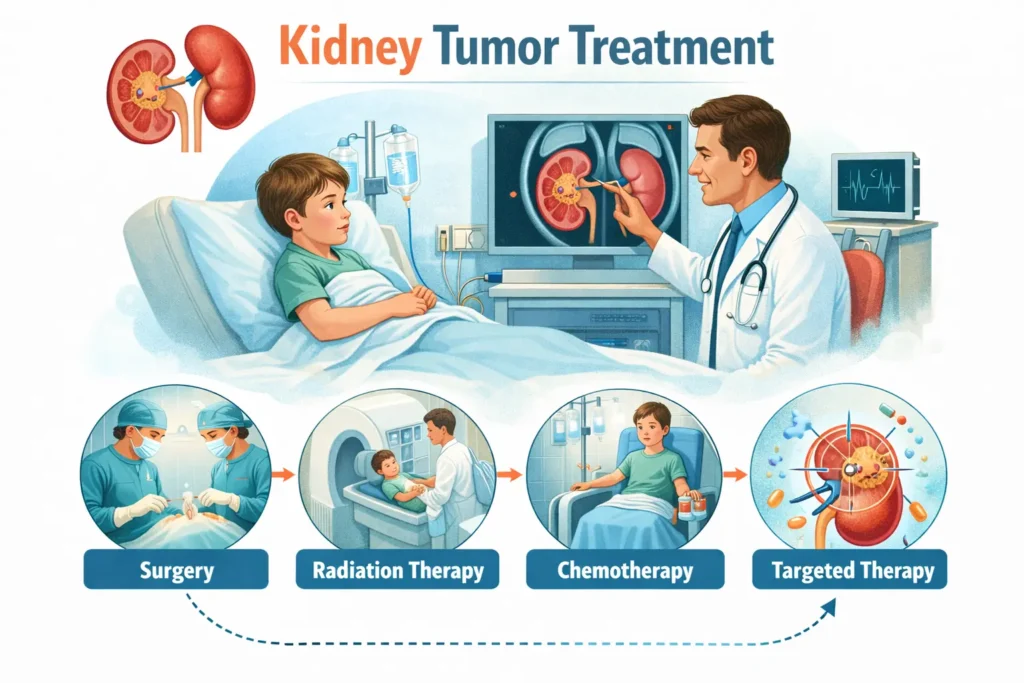
Kidney Tumour Treatment
Kidney tumours can be benign (non-cancerous) or malignant (cancerous). The most common type of kidney cancer is renal cell carcinoma (RCC), which accounts for approximately 85% of all kidney cancers. Early detection and expert treatment are crucial for optimal outcomes.
Types of Kidney Tumours
Malignant (Cancerous) Tumours:
- Renal Cell Carcinoma (RCC):The most common kidney cancer in adults
- Clear cell carcinoma (most common subtype)
- Papillary carcinoma
- Chromophobe carcinoma
- Collecting duct carcinoma
Transitional Cell Carcinoma:Cancer affecting the renal pelvis
Wilms Tumour:Primary kidney cancer in children
Renal Sarcoma:Rare connective tissue cancer
Benign (Non-Cancerous) Tumours:
- Oncocytoma:Most common benign kidney tumour
- Angiomyolipoma:Composed of blood vessels, muscle, and fat tissue
Signs and Symptoms
Kidney tumours may not cause symptoms in early stages, which is why regular health screenings are important. When symptoms do occur, they may include:
Common Symptoms
- Blood in urine (hematuria) – visible or microscopic
- Persistent pain in the side or back
- Unexplained weight loss
- Fatigue and weakness
- Intermittent fever not caused by infection
- Palpable mass in the abdomen or side
Advanced Disease Symptoms
- Bone pain (if cancer has spread)
- Persistent cough or shortness of breath
- Swelling in legs or ankles
- High blood pressure
- Anaemia (low red blood cell count)
Diagnostic Evaluation
Dr. D K Chughh employs comprehensive diagnostic approaches to accurately diagnose and stage kidney tumours:
Initial Assessment
- Detailed medical history and physical examination
- Laboratory tests including complete blood count, kidney function tests
- Urinalysis to detect blood or abnormal cells
- Blood chemistry panel
Advanced Imaging
- CT Scan (Computed Tomography): Gold standard for kidney tumour evaluation
- MRI (Magnetic Resonance Imaging): Detailed soft tissue evaluation
- Ultrasound: Initial screening and monitoring tool
- PET Scan: For advanced staging when indicated
- Chest X-ray or CT: To evaluate for metastatic disease
Specialized Diagnostic Procedures
- CT-guided biopsy: When tissue diagnosis is needed
- Cystoscopy: To evaluate upper urinary tract involvement
- Bone scan: If bone metastases are suspected
Treatment Approaches
Dr. D K Chughh offers a full spectrum of treatment options, tailored to each patient’s specific tumour characteristics and overall health:
Surgical Treatment Options
Robotic and Laparoscopic Surgery: As a Fellow of the International College of Robotic Surgeons (FICRS), Dr. Deepak Kumar specializes in minimally invasive approaches:
- Robotic Partial Nephrectomy:Removal of tumour while preserving healthy kidney tissue
- Robotic Radical Nephrectomy:Complete kidney removal when necessary
- Laparoscopic Surgery:Minimally invasive approach with smaller incisions
Benefits of Robotic Surgery:
- Enhanced surgical precision and control
- Smaller incisions and reduced scarring
- Less blood loss during surgery
- Faster recovery and shorter hospital stay
- Reduced post-operative pain
- Better preservation of kidney function
Open Surgery: When complex cases require traditional approach:
- Open Partial Nephrectomy:For complex tumours requiring nephron-sparing surgery
- Open Radical Nephrectomy:For large or complicated tumours
- Inferior Vena Cava Thrombectomy:For tumours with vascular extension
Nephron-Sparing Surgery (Partial Nephrectomy)
Dr. D K Chughh offers a full spectrum of treatment options, tailored to each patient’s specific tumour characteristics and overall health:
Whenever possible, Dr. Chughh performs nephron-sparing surgery to preserve kidney function:
Advantages:
- Preservation of kidney function
- Reduced risk of chronic kidney disease
- Lower risk of cardiovascular complications
- Maintained quality of life
Advanced Treatment Techniques
Ablative Therapies: For select patients who are not surgical candidates:
- Radiofrequency Ablation (RFA):Heat-based tumour destruction
- Cryoablation:Freeze-based tumour treatment
- Microwave Ablation:Advanced thermal ablation technique
Active Surveillance: For small, slow-growing tumours in appropriate patients:
- Regular imaging monitoring
- Delayed intervention when necessary
- Suitable for elderly patients or those with significant comorbidities
Paediatric Kidney Tumour Treatment
Dr. D K Chughh provides specialized care for children with kidney tumours:
Wilms Tumour Treatment
- Multidisciplinary approach with paediatric oncologists
- Chemotherapy protocols specific to paediatric patients
- Nephron-sparing surgery when possible
- Long-term follow-up for growth and development
Rare Paediatric Kidney Tumours
- Clear cell sarcoma
- Rhabdoid tumour
- Mesoblastic nephroma
Specialized treatment protocols for each tumour type
Accurate staging determines treatment approach and prognosis:
TNM Staging System
- T (Tumour): Size and local extent of primary tumour
- N (Nodes): Involvement of regional lymph nodes
- M (Metastases): Presence of distant metastases
Stage Groups
- Stage I: Small tumour confined to kidney
- Stage II: Larger tumour confined to kidney
- Stage III: Tumour extending beyond kidney or involving lymph nodes
- Stage IV: Distant metastases present
Prognostic Factors
- Tumour stage and grade
- Histological subtype
- Patient’s overall health
- Kidney function status
- Response to treatment
Post-Operative Care and Recovery
Dr. D K Chughh provides comprehensive post-operative care to ensure optimal recovery:
Immediate Post-Operative Period
- Pain management and comfort measures
- Monitoring kidney function and fluid balance
- Early mobilization and respiratory care
- Wound care and infection prevention
Long-Term Follow-Up
- Regular imaging surveillance
- Kidney function monitoring
- Cancer recurrence screening
- Management of treatment-related side effects
Surveillance Schedule
- CT scans at regular intervals
- Laboratory monitoring of kidney function
- Physical examinations
- Symptom assessment and quality of life evaluation
Multidisciplinary Care Team
Complex kidney tumours often require collaborative care:
Team Members
- Urologic Oncologist: Dr. Chughh leads surgical treatment
- Medical Oncologist: Systemic therapy when indicated
- Radiation Oncologist: Radiation therapy for select cases
- Radiologist: Expert imaging interpretation
- Pathologist: Tissue diagnosis and tumour characterization
- Social Worker: Psychosocial support and resources
Success Rates and Outcomes
Dr. Chughh’s expertise in kidney tumour treatment translates to excellent outcomes:
- Five-year survival rates: Consistently above national averages
- Nephron preservation: High rates of successful partial nephrectomy
- Low complication rates: Minimally invasive techniques reduce surgical risks
- Functional outcomes: Excellent preservation of kidney function
- Quality of life: Rapid return to normal activities
When to Seek Treatment
Don’t delay seeking expert evaluation if you experience:
- Blood in urine
- Persistent side or back pain
- Unexplained weight loss
- Abdominal mass or swelling
- Persistent fatigue
Early detection and treatment provide the best outcomes for kidney tumours.
Why Choose Dr. D K Chughh for Kidney Tumour Treatment?
- Surgical Excellence: Over 6,000 surgeries with expertise in complex kidney tumor cases
- Advanced Technology: Robotic surgery certification for minimally invasive treatment
- Comprehensive Care: Complete evaluation, treatment, and long-term follow-up
- Experience with All Ages: Treatment of both adult and paediatric kidney tumors
- Multidisciplinary Approach: Collaboration with oncology specialists when needed
- Research Involvement: Access to latest treatments and clinical trials
- Personalized Treatment: Tailored approach based on individual patient needs
Book Your Consultation Today
Expert Kidney Care | Advanced Urology Treatment | 15+ Years of Experience
Visit Our Clinic
Center for Kidney Diseases And Urology
Lower Ground, A-9, Block A, Chittaranjan Park,
New Delhi, Delhi 110048